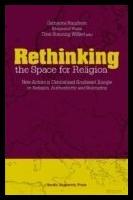
Rethinking the space for religion : New actors in Central and Southeast Europe on religion, authenticity and belonging
Inbunden bok.
Nyskick. En bok med olika författares perspektiv på religion, kultur och globalisering. | Nordic Academic Press, Utg. 2012 | Förlagsband. 8:o (150x227 mm)
Inrikes enhetsfrakt Sverige: 62 SEK

Förlagsfakta
- ISBN
- 9789187121852
- Titel
- Rethinking the space for religion : new actors in Central and Southeast Europe on religion, authenticity and belonging
- Författare
- Aronsson, Peter
- Förlag
- Nordic Academic Press
- Utgivningsår
- 2012
- Omfång
- 332 sidor
- Bandtyp
- Inbunden
- Mått
- 150 x 227 mm Ryggbredd 28 mm
- Vikt
- 670 g
- Språk
- English
- Baksidestext
- What happens to people s sense of belonging when globalization meets with proclaimed regional identities resting heavily on conceptions of religion and ethnicity? Who are the actors stressing cultural heritage and authenticity as tools for self-understanding?
In Rethinking the Space for Religion, the authors aim at a broad discussion on how history and religion are made part of the production of narratives about origin and belonging in contemporary Europe. The contributors offer localized studies where actors with strong agendas indicate the complex relations between history, religion, and identity.
The case studies exemplify how public intellectuals and academics have taken active part in the construction of recent and traditional pasts. Instead of repeating the simplistic explanation as a return of religion , the authors of this volume focus on public platforms and agents, and their use of religion as a political and cultural argument. The approach makes a nuanced and fresh survey for researchers
and other initiated readers to engage in.
9789187121852