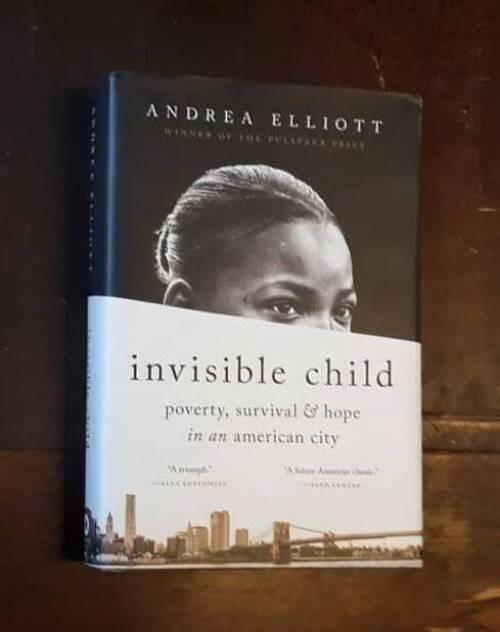
Invisible Child: Poverty, Survival & Hope in an American City
Inbunden bok. Random House. 2021. XX,603 sidor.
Gott skick. Skyddsomslag i gott skick. Inbunden i förlagets pappband med skyddsomslag.
Inrikes enhetsfrakt Sverige: 62 SEK
Förlagsfakta
- ISBN
- 9780812986945
- Titel
- Invisible Child: Poverty, Survival & Hope in an American City
- Författare
- Elliott, Andrea
- Förlag
- Random House
- Utgivningsår
- 2021
- Omfång
- 0 sidor
- Bandtyp
- Mått
- 0 x 240 mm Ryggbredd 0 mm
- Vikt
- 0 g
- Språk
- English
- Baksidestext
- "Invisible Child follows eight dramatic years in the life of Dasani Coates, a child with an imagination as soaring as the skyscrapers near her Brooklyn homeless shelter. Born at the turn of a new century, Dasani is named for the bottled water that comes to symbolize Brooklyn's gentrification and the shared aspirations of a divided city. As Dasani grows up, moving with her tightknit family from shelter to shelter, her story reaches back to trace the passage of Dasani's ancestors from slavery to the Great Migration north. By the time Dasani comes of age in the twenty-first century, New York City's homeless crisis is exploding amid the growing chasm between rich and poor. In the shadows of this new Gilded Age, Dasani must lead her seven siblings through a thicket of problems: hunger, parental addiction, violence, housing instability, pollution, segregated schools, and the constant monitoring of the child-protection system. When, at age thirteen, Dasani enrolls at a boarding school in Pennsylvania, her loyalties are tested like never before. As she learns to "code-switch" between the culture she left behind and the norms of her new town, Dasani starts to feel like a stranger in both places. Ultimately, she faces an impossible question: What if leaving poverty means abandoning the family you love?" --
Random House
9780812986945