![På plats i historien [Elektronisk resurs] : Studier av hembygsföreningar på 2000-talet](https://dez1v4fbcawql.cloudfront.net/product_thumb/278441/10481255/60a65918cb992.jpg)
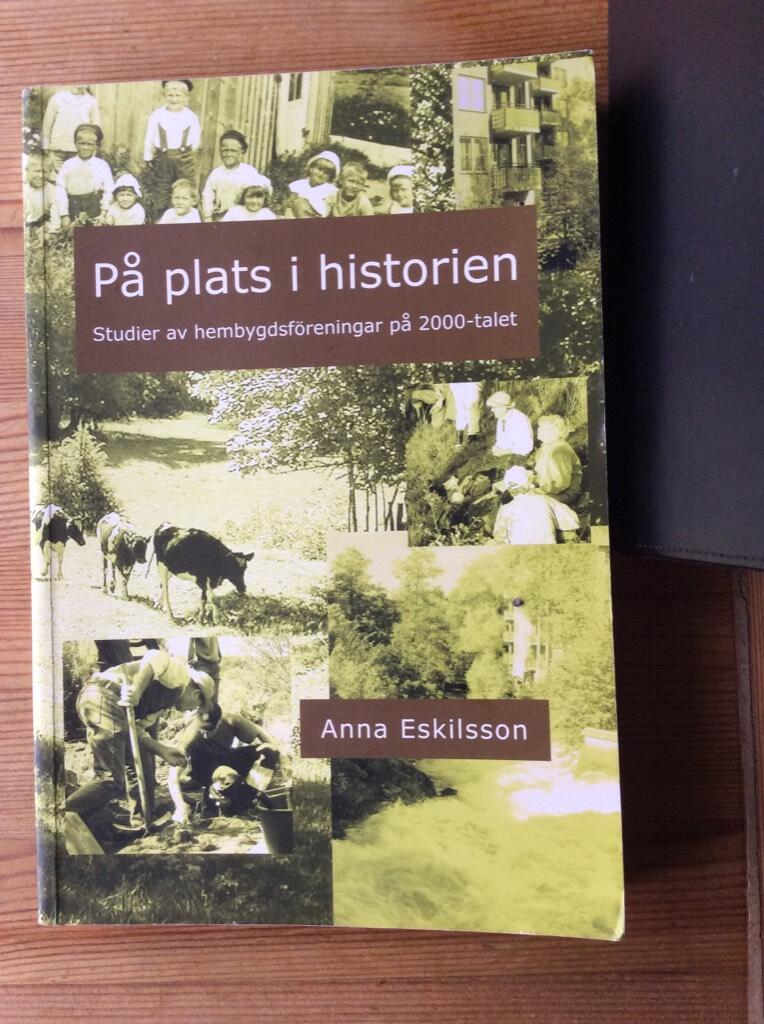
På plats i historien [Elektronisk resurs] : Studier av hembygsföreningar på 2000-talet
Häftad bok. Linköping : Linköping University Electronic Press. 2008. 239 sidor.
Nära nyskick. Akademisk avhandling.
Inrikes enhetsfrakt Sverige: 62 SEK
Förlagsfakta
- ISBN
- 9789173939812
- Titel
- På plats i historien
- Undertitel
- Studier av hembygdsföreningar på 2000-talet
- Författare
- Eskilsson, Anna
- Förlag
- Institutionen för studier av samhällsutveckling och kultur, Linköpings universitet
- Utgivningsår
- 2008
- Omfång
- 239 sidor
- Bandtyp
- Mått
- 0 x 250 mm Ryggbredd 0 mm
- Vikt
- 0 g
- Språk
- Svenska
- Baksidestext
- Local heritage societies were established in Sweden for about a hundred years ago. The societies responded to the large changes of industrialisation, emigration and urbanisation during that time. Today there are about 2 000 societies with almost half a million members altogether. Why do people turn to local heritage societies today? The image of them, associated with folklore costumes and quaint old cottages, is not consistent with the extensive activity in the 21st century. That raises questions that have not been clarified in previous research. The aim of this thesis is to find out what today's local heritage societies do, as well as to investigate what their meanings are for people and the local society. Thereby the intention is to contribute to an understanding of their present extent and endurance over time. The activities of three local heritage societies in and around the city of Linköping are mapped out in this thesis. The survey shows extensive and very broad activities that are well adjusted to present time. The traditional image has become rigid, but in parts it is accurate since the activities are still dominated by local use of history., which also contributes to their extent and continuity. Place and history as common ground is something universal: The need for people to be oriented in time and space contributes to the persistence of the local heritage societies. At the same time there seems to be something strong in society today which contributes to their extent. The thesis shows that the societies can have knowledge-generating, ideological, existential and social meaning. Through the local heritage society people can learn about, evaluate and gain feelings for the place. The society also contributes to strengthening the power of togetherness in the local community as a part of the civilian society. The multifaceted meaning of the activities makes it possible for the societies to keep or even strengthen their attraction, especially among the large group of retired people.
Linköping : Linköping University Electronic Press
9789173939812