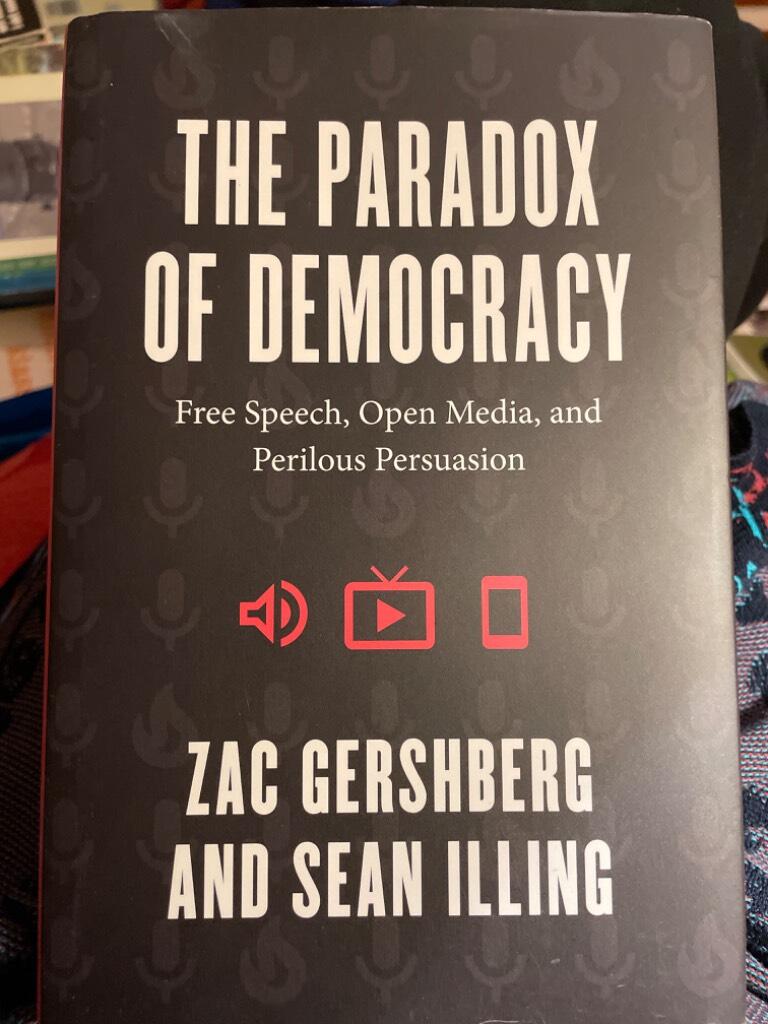
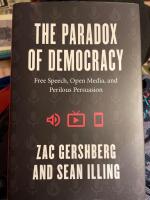
The paradox of democracy - free speech, open media, and perilous persuasion
Inbunden bok. University of Chicago Press. 2022. 329 sidor.
Mycket gott skick. Skyddsomslag i mycket gott skick.
Inrikes enhetsfrakt Sverige: 62 SEK

Förlagsfakta
- ISBN
- 9780226681702
- Titel
- The paradox of democracy - free speech, open media, and perilous persuasion
- Författare
- Gershberg, Zachary
- Utgivningsår
- 2022
- Omfång
- 329 sidor
- Bandtyp
- Hardcover
- Språk
- English
- Baksidestext
- "In The Paradox of Democracy: New Media and the Eternal Problem of Politics, Sean Illing and Zac Gershberg argue that, although free speech and media has always been a necessary condition of democracy, that very freedom also is its greatest threat. Free speech gives those who would destroy democracy license to mislead the public, using whatever forms of media are available. New forms of media offer opportunities to both supporters and critics of democracy. Reaching back to the ancient Greeks and continuing through media disruptions such as the invention of the printing press, the growth of "yellow" journalism and mass circulation newspapers, to new media today, they contend that democracies have always been unsettled by changes in media. The authors trace how each of these changes have challenged democracy by providing new ways of talking about politics and of reaching audiences with often unsettling effects. They conclude by exploring what kinds of communication facilitates and defends democracy as changing technology overwhelms older forms of communication"--
University of Chicago Press
9780226681702