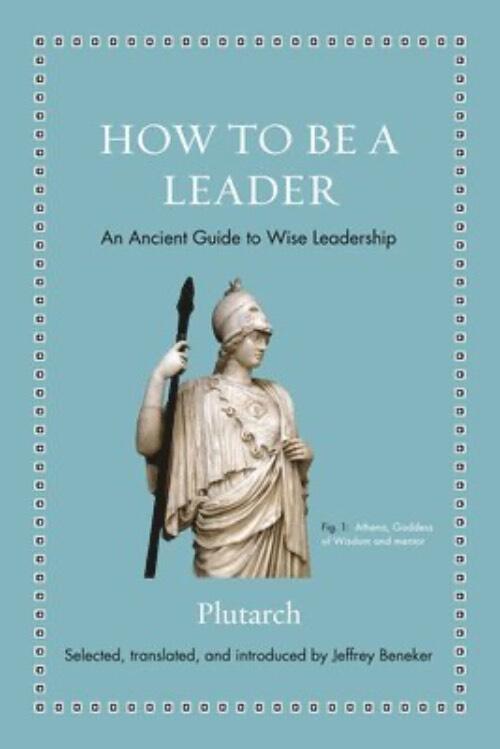
How to be a leader: An ancient guide to wise leadership
Inbunden bok. Princeton University Press. 2019. 384 sidor.
Nyskick. Skyddsomslag i nyskick. Perfekt ex. Oläst. Ingen namnteckning. Snygg bok i mindre format, fint bunden.
Inrikes enhetsfrakt Sverige: 62 SEK

Förlagsfakta
- ISBN
- 9780691192116
- Titel
- How to be a leader - an ancient guide to wise leadership
- Författare
- Plutarch
- Utgivningsår
- 2019
- Omfång
- 384 sidor
- Bandtyp
- (hardcover
- Språk
- English
- Baksidestext
- "The philosopher, statesman, and moralist Plutarch of Chaeronia (first and early second centuries CE) begins his essay Political Advice, wherein he advises a man about how to embark upon a career in government and how to become an effective leader by saying: 'First of all, let the primary motivation for political activity be a conscious choice based on judgment and reason, which serves as a firm and strong foundation, and let the choice not be rashly inspired by the vain pursuit of glory, a sense of rivalry, or a lack of other meaningful activities.' In How to Lead, classicist Jeffrey Beneker translates three of Plutarch's political essays: To an Uneducated Leader, Political Advice, and The Role of the Elder Statesman. In these essays Plutarch seeks not only to advise these budding, practicing, and even aging politicians about the problems of governing their Greek cities under Roman rule, but also to educate them about general principles of leadership. Plutarch thought quite a lot about political leadership. The management of public affairs at all levels is one of the most important of human endeavors. It requires education, character, and commitment. He encourages those who desire to lead, and he gives advice based mainly on the experiences of great leaders of the past. These essays are timeless reflections on the proper way to lead and serve, publicly, at least with respect to the European and American political traditions. The essays emphasize the importance of personal integrity and friendships, how best to persuade one's fellow citizens, the dangers inherent in rivalry, and that the successful management of public affairs demands respect for the state's institutions, cooperation among politicians, and the subordination of one's own glory to the welfare of the state"--
Princeton University Press
9780691192116