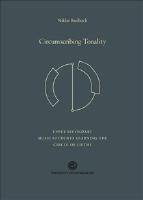
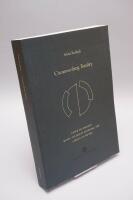
Circumscribing Tonality: Upper Secondary Music Students Learning the Circle of Fifths
Häftad bok. ArtMonitor. 2020. 403 sidor.
Mycket gott skick.
Inrikes enhetsfrakt Sverige: 62 SEK
Förlagsfakta
- ISBN
- 9789180090285
- Titel
- Circumscribing Tonality: Upper Secondary Music Students Learning the Circle of Fifths
- Författare
- Rudbäck, Niklas
- Förlag
- ArtMonitor
- Utgivningsår
- 2020
- Omfång
- 403 sidor
- Bandtyp
- Häftad
- Mått
- 0 x 0 mm Ryggbredd 0 mm
- Vikt
- 0 g
- Språk
- Baksidestext
- The fundamental motivation for this research project is that listening is central to all musical activities, and that semiotic means for visualizing, representing, and conceptualizing music are central to educational endeavors aimed at developing trained listening. There is, however, a lack of research on how such semiotic means are taught and learned, especially in the aural skills and music theory subjects and in secondary education. Therefore, this thesis investigates upper secondary music students’ processes of learning the circle of fifths and some associated music-theoretical concepts, and how those processes relate to the practice of aural skills and music theory education they are engaged in. I ask two research questions: 1. How do participants introduce, reproduce, and use the circle of fifths in the educational practice? 2. How do the specific ways in which the circle of fifths is introduced, reproduced, and used in the educational practice facilitate learning processes? Theoretically, the study draws on Vygotsky’s distinction between scientific and everyday concepts, and conceives of the circle of fifths as an inscription. The study takes a qualitative case study approach, combining interviews with students and observation of lessons, both documented by video. The analysis focuses on how participants interact, how they use inscriptions, and on how this constitutes co-constructive microgenetic processes. The analysis shows an educational practice where the circle of fifths is deployed as a tool for solving transposing problems, and where the ability to use mnemonic techniques to reproduce the diagram is highly valued. This focus on mnemonics and algorithms for problem-solving tends to foreground the logic of the representations, rather than the logic being represented, which makes it difficult for students to apply the algorithms on different kinds of problems. For example, circumscribing a group of chords in the diagram is used to represent a key. This makes it difficult to distinguish major and minor keys, and to conceive of key as a property of melodies. The circle of fifths is used to visualize central concepts, which are then used to explicate the circle of fifths, creating a circular conceptual system. While some circularity may be unavoidable given the previous knowledge of the students, it is proposed that the circularity is exacerbated by a lack of musical examples and formal definitions.
ArtMonitor
9789180090285