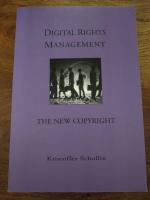
Digital Rights Management The New Copyright
Häftad bok. Jure Förlag. 2008. 380 sidor.
Mycket gott skick. Inga understrykningar eller anteckningar i boken. Mycket lätt kantstött och några knappt synliga märken på baksidan av boken.
Inrikes enhetsfrakt Sverige: 62 SEK

Förlagsfakta
- ISBN
- 9789172233171
- Titel
- Digital Rights Management The New Copyright
- Författare
- Schollin, Kristoffer
- Förlag
- Jure Förlag
- Utgivningsår
- 2008
- Omfång
- 380 sidor
- Bandtyp
- Häftad
- Språk
- English
- Baksidestext
- DRM DIGITAL RIGHTS MANAGEMENT is a wide term that covers many forms of technological schemes for controlling access, use and distribution of creative works from the blunt and static restrictions on copy-protected Compact Discs to the sophisticated and fluid usagerules in online music- and movie-stores such as iTunes. DRM technologies have been created and designed in response to a social development where global, digital networks are putting serious pressure on traditional distribution channels. From the early days of peer-to-peer networks to the current diversity of online communities centered on digital file sharing, the landscape has transformed rapidly.
Using a critical, constructivist and functionalist approach to law, this book analyzes DRM as legal phenomena in the middle of this transforming landscape. Hence DRM is examined from a range of perspectives as a tool of normative communication and regulation as well as ideological systematization of rights and positions of control.
While some forms of DRM have little more objective than to halt or slow the transformation of media businesses, in other forms it is used in serious attempts to eke out new niches and control positions that resonate within a new digital landscape. In the end, this book essays to place DRM in the evolutionary development of Copyright and weighs its potential merits and flaws in crafting a new copyright a potential that has yet to be realized.
Jure Förlag
9789172233171