


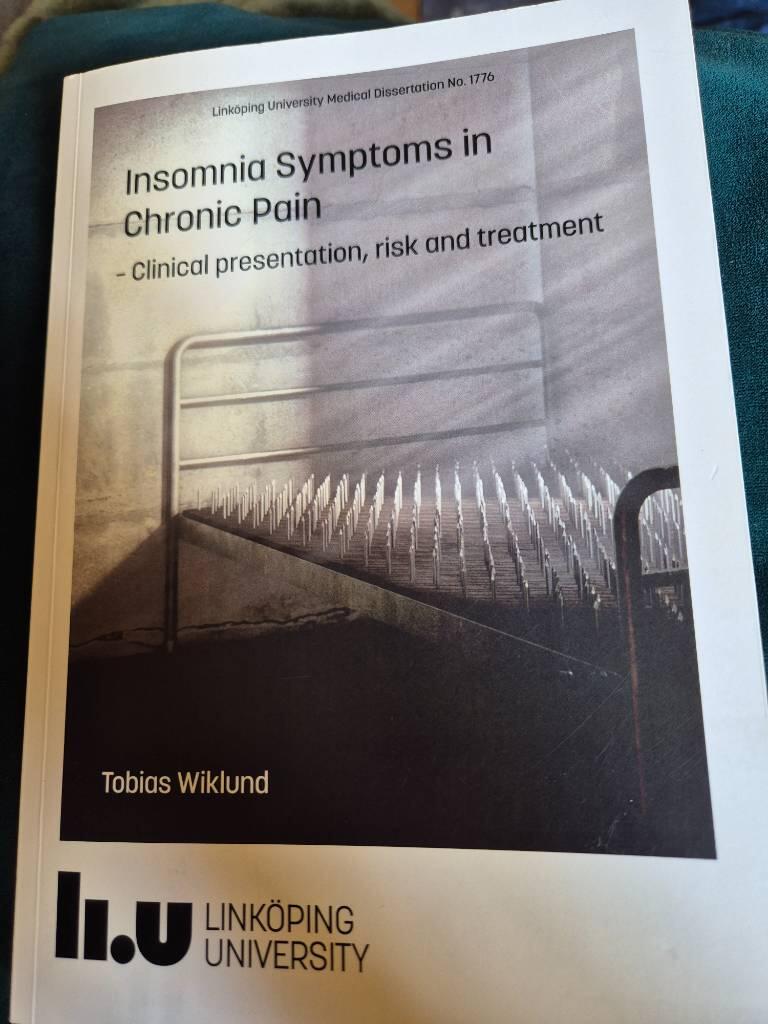
Insomnia Symptoms in Chronic Pain
Häftad bok. Linköping University, Department of Health, Medicine and Caring Sciences. 2021. 65 sidor.
Nära nyskick. På engelska och svenska
Inrikes enhetsfrakt Sverige: 62 SEK
Förlagsfakta
- ISBN
- 9789179296674
- Titel
- Insomnia Symptoms in Chronic Pain - Clinical presentation, risk and treatment
- Författare
- Wiklund, Tobias
- Förlag
- Linköping University, Department of Health, Medicine and Caring Sciences
- Utgivningsår
- 2021
- Omfång
- 65 sidor
- Bandtyp
- Mått
- 0 x 0 mm Ryggbredd 0 mm
- Vikt
- 0 g
- Språk
- Baksidestext
- In recent years, chronic and recurrent pain have gained interest as distinct conditions interacting both with peripheral and central parts of the nervous system as well as with the immune system. The risk of getting affected by abnormal pain modulation i.e., chronic pain is not equally distributed in the population and the search for risk factors is therefore of interest. One potential risk factor for chronic pain is insomnia symptoms i.e., difficulties falling asleep or maintaining sleep. In turn, insomnia symptoms are overrepresented in persons with chronic pain. Common current pain treatments lead to limited improvement of insomnia symptoms calling for treatments specifically directed to improve sleep. The overall aim of this thesis is therefore to investigate the distribution of insomnia severity in patients seeking specialized care for chronic pain, to investigate the role of insomnia severity as a risk factor for spreading of pre-existing pain, and to evaluate potential treatments for insomnia symptoms comorbid to chronic pain. Study I highlighted the high prevalence rates of insomnia symptoms in patients with chronic pain conditions. Roughly, insomnia was six times more common in our sample compared to the general population. We also showed that there were weak connections between insomnia symptoms and other variables (primarily psychological symptoms and pain intensity). In Study II physical exercise was more efficacious than Acceptance and Commitment Therapy-based stress management and the active control group in reducing insomnia symptoms and pain intensity short term. Improvements in physical exercise were largely maintained after twelve months but pain intensity had then also declined in the control group. No improvements in the Acceptance and Commitment Therapy-based stress management remain significant when an intention to treat principles were applied. In Study III, a dose-dependent increase in risk for spreading of pain was confirmed in subjects reporting moderate and severe insomnia symptoms. Though, there was no increase in the risk of pain spreading in subjects reporting sub-threshold insomnia symptoms (according to Insomnia Severity Index). In Study IV patients in the Internet-delivered Cognitive Behavioural Therapy for insomnia group, showed a more rapid improvement in insomnia symptoms than patients in the internet-delivered applied relaxation. The effect of Cognitive Behavioural Therapy for insomnia had declined slightly after six months and the Applied Relaxation group had continued to improve, leading to a comparable outcome on the Insomnia Severity Index at six-month follow-up. In conclusion, insomnia symptoms are common in patients seeking specialized pain care. High levels of insomnia symptoms increase the risk of spreading of pre-existing pain and this in a dose-dependent manner. Physical exercise has significant, but not clinically meaningful effects on pain intensity and insomnia symptoms. Internet-delivered Cognitive Behavioral Therapy for insomnia leads to a more rapid reduction of insomnia symptoms compared to applied relaxation, although long-term effects are uncertain
Linköping University, Department of Health, Medicine and Caring Sciences
9789179296674


![Diabetes - [att förebygga och leva med en folksjukdom : maten, motionen, läkemedlen]](https://dez1v4fbcawql.cloudfront.net/metadata_thumb/978/918/551/9789185511020.jpg)


